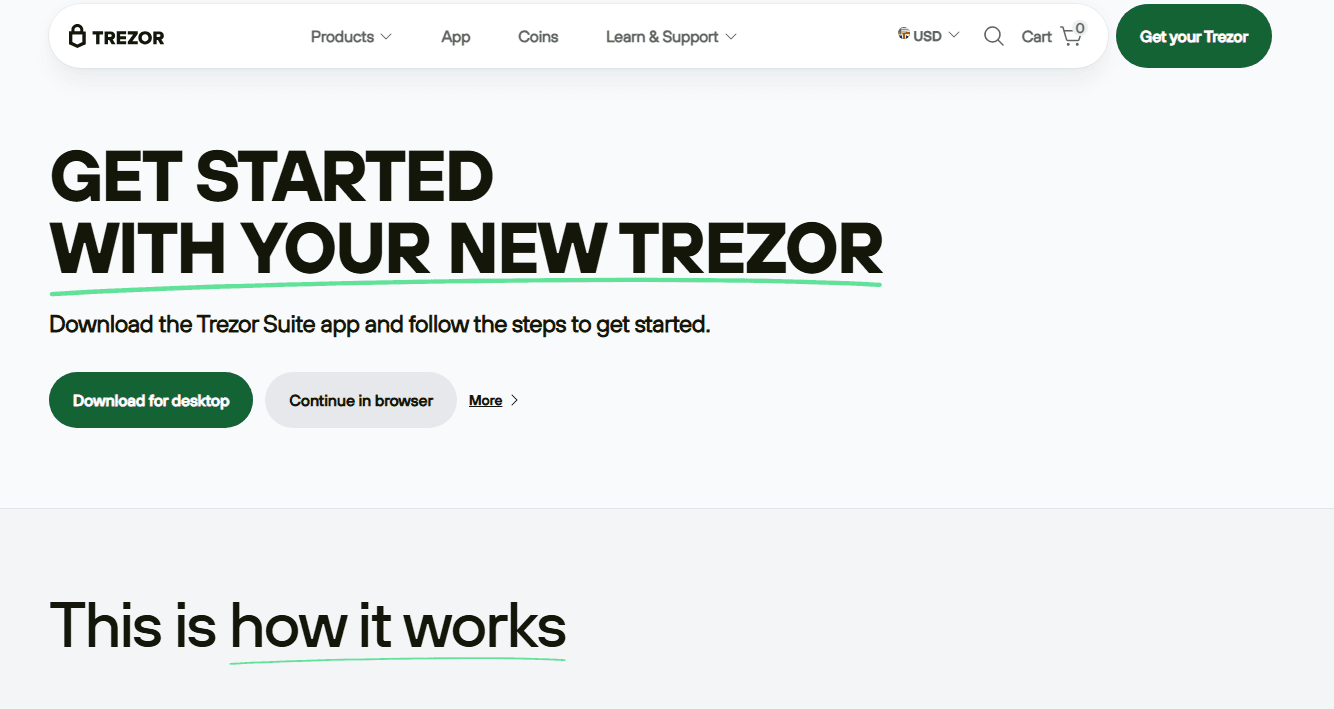
Trezor.io/Start: A Complete 1200-Word Beginner’s Guide
Setting up a hardware wallet can feel overwhelming if you’re new to crypto security, but the Trezor onboarding process is designed to be simple, clear, and beginner-friendly. The purpose of the Trezor.io/start experience is to help you move from taking your device out of the box to storing and managing digital assets with confidence. Whether you are setting up a Trezor Model One or Trezor Model T, the steps remain similar. This guide walks you through everything you need to know—installation, security basics, device initialization, backup creation, wallet management, and best practices.
1. Understanding the Purpose of Trezor.io/Start
The platform is the official starting point for all Trezor devices. It ensures that each user sets up their hardware wallet safely, avoids counterfeit software, and follows recommended security procedures. Through this portal, you download the official application, update firmware, and receive instructions that help you protect your recovery seed and wallet data from unauthorized access.
Because a hardware wallet stores your private keys offline, its main job is to give you complete control over your digital assets. Trezor.io/start helps you configure this environment correctly so your coins stay safe even if your computer is compromised.
2. What You Need Before You Begin
Before starting your setup, make sure you have:
A Trezor device (Model One or Model T)
A computer with a USB port
A stable internet connection
The USB cable included with the device
A quiet place where you won’t be interrupted while creating your recovery seed
The recovery seed is the most important part of the entire process. It works as the master backup of your wallet, and you must store it securely offline.
3. Installing the Trezor Software
The first step at Trezor.io/start is to download the companion application. After installation, open the software and connect your Trezor to your computer using the provided cable. The app automatically checks whether your hardware wallet needs a firmware update. If the device is brand-new, it usually requires a one-time firmware installation.
Follow the on-screen prompts carefully. Firmware updates are essential because they strengthen device security, add new features, and support additional cryptocurrencies. The installation happens directly within the application, ensuring that you’re always using authentic Trezor software.
4. Initializing Your Device
Once your device is updated, the setup wizard guides you through initialization. You will be asked to create a new wallet. This process generates a unique set of private keys inside the device. These keys never leave your Trezor and are used to authorize transactions securely.
During the initialization stage, you’ll also be prompted to set a PIN. This PIN protects your device from unauthorized physical access. Even if someone steals the wallet, they cannot access funds without your PIN. Make sure to choose a PIN that is easy for you to remember but difficult for others to guess.
5. Creating and Securing Your Recovery Seed
The recovery seed is one of the most critical components of your Trezor setup. During setup, the device displays a series of words—typically 12, 18, or 24 depending on the model. Write these words on the provided recovery card. Do not take photos, do not type the words on your computer, and do not store them online.
This recovery seed is your ultimate backup. If your Trezor is lost, damaged, or reset, the seed allows you to recover your entire wallet and all associated accounts. Store the card in a secure, offline location. Many users prefer using a metal backup plate or storing the words in a hidden, waterproof location.
Remember:
Anyone who has your recovery seed can access your crypto. Your device can be replaced; your seed cannot.
6. Adding Wallet Accounts
After securing your recovery seed, you can begin adding accounts within the Trezor interface. An account represents a specific blockchain type, such as Bitcoin, Ethereum, or Litecoin. You can add multiple accounts under each network.
The Trezor software provides an organized dashboard where you can switch between accounts, track balances, view transaction history, and manage assets. Each account’s private keys remain stored inside your hardware wallet, not on your computer.
7. Sending and Receiving Assets
The Trezor interface makes it simple to send or receive cryptocurrency.
Receiving Funds
To receive assets, open the account of your choice and click the receive option. The software displays your wallet address and a QR code. You must always verify the address on the Trezor device screen to ensure it matches what you see on your computer. This step protects you from malware that might alter clipboard data.
Sending Funds
To send assets, select the account and enter the recipient address and amount. The transaction must be confirmed physically on your Trezor device. This dual-confirmation system prevents unauthorized access and ensures your funds cannot be moved without your approval.
8. Managing Security Settings
Trezor provides several security features that strengthen your wallet:
PIN Protection
Your PIN prevents anyone from using your device without permission. After each incorrect attempt, the waiting time increases, making brute-force attacks nearly impossible.
Passphrase Feature
A passphrase adds an extra layer of protection. Think of it as a 25th recovery word. With a passphrase, even if someone has your recovery seed, they cannot access your wallet without the additional phrase. It is optional but recommended for advanced users.
Firmware Updates
Keeping your firmware up-to-date ensures maximum protection. Updates include security improvements and support for additional coins.
Offline Seed Storage
Never store your recovery seed digitally. Avoid cloud storage, email, or messaging apps. A handwritten offline backup is the safest method.
9. Using Trezor Safely
Security isn’t just about the device itself; it’s also about how you use it. Here are essential best practices:
Use your device only on trusted computers.
Avoid downloading unverified software or extensions.
Do not discuss your recovery seed with anyone.
Disconnect your Trezor when not actively managing assets.
Double-check addresses before confirming transactions.
Keep your device and seed stored separately.
These habits reduce the risk of phishing attacks, malware interference, and physical theft.
10. Troubleshooting and Device Recovery
If you ever lose your Trezor, forget your PIN, or the device becomes physically damaged, don’t panic. Your recovery seed allows you to restore your wallet on any new Trezor device. During recovery, the software prompts you to input your seed directly on the hardware wallet screen. This design prevents keylogging or screen-capture attacks because the seed is never typed on your computer.
If you encounter technical issues, the Trezor software includes built-in troubleshooting guidance. Common problems include connection errors, outdated firmware, or USB cable issues. Most issues can be solved by reconnecting the device, updating the application, or restarting your computer.
11. Advantages of Using Trezor
Some of the key benefits of using a hardware wallet like Trezor include:
Improved security through offline key storage
Full control of your private keys
Transparent open-source technology
Wide cryptocurrency support
Ease of use for beginners
Physical confirmation for every transaction
These features make Trezor a trusted choice for both casual users and long-term cryptocurrency investors.
12. Final Thoughts
Trezor.io/start is designed to provide a safe and guided setup experience for new users. By following the steps—installing the software, updating firmware, securing your recovery seed, and configuring accounts—you create a robust environment for storing and managing digital assets. The combination of offline security, intuitive design, and personal control makes Trezor one of the most reliable solutions for safeguarding cryptocurrencies.
If you ever need to reset, restore, or reconfigure your wallet, your recovery seed ensures long-term protection. With proper care, your Trezor device can serve as a secure vault for years.