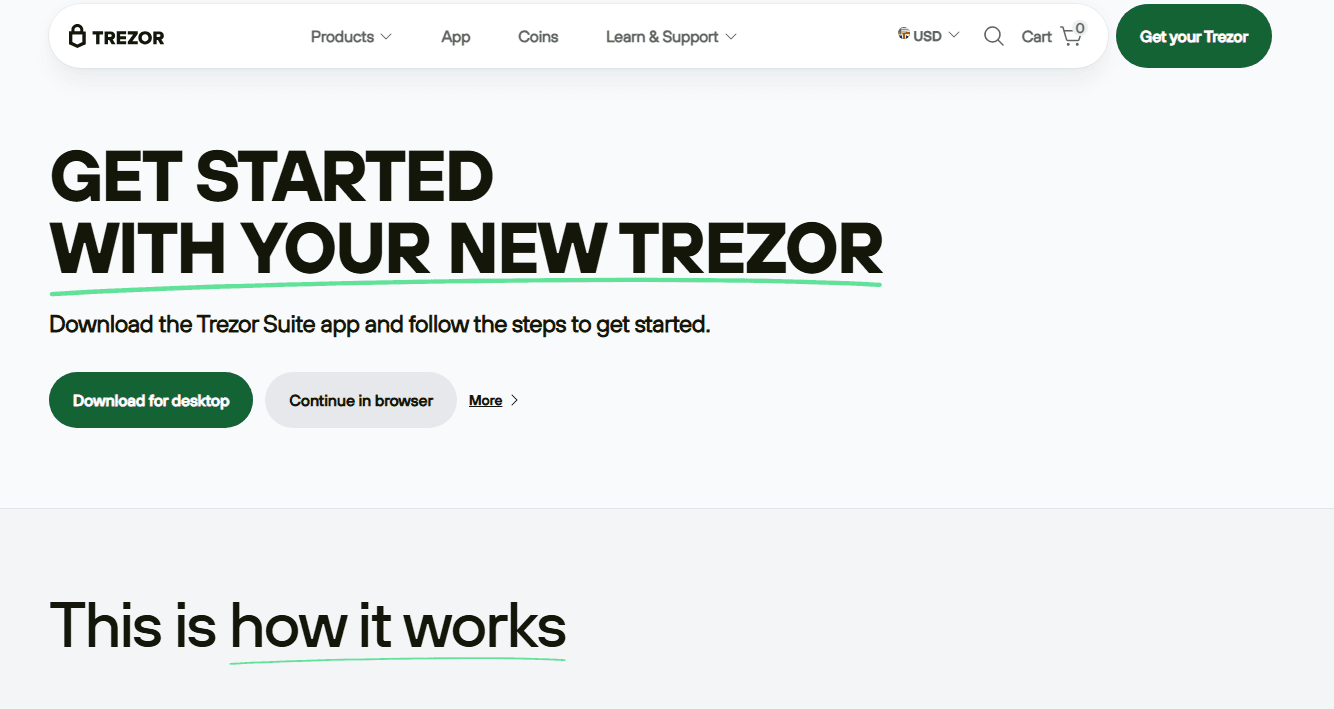
Trezor.io/Start – A Complete 1200-Word Guide
Trezor is one of the most well-known brands in the world of hardware wallets, providing tools that help people keep their digital assets secure through offline protection. When people refer to Trezor.io/start, they usually mean the process of setting up a new Trezor device for the first time. The setup page guides users through preparing their hardware wallet, installing the Trezor Suite application, creating a recovery phrase, and learning basic safety practices.
Even though the idea of a hardware wallet can sound complicated, the Trezor setup process is designed to be beginner-friendly. This guide explains, in simple and clear terms, how the Trezor.io/start process works, why each step matters, and how users can understand the device’s security design.
What Trezor.io/Start Represents
Trezor.io/start is essentially the beginner’s path for learning how to use a Trezor wallet. It helps users with:
Initial device setup
Installing Trezor Suite
Understanding the recovery seed
Exploring the wallet interface
Learning security fundamentals
The process is designed to make sure that only the device’s owner has full control. Instead of passwords stored online, the Trezor model relies on offline security and local device confirmations.
Understanding What a Trezor Device Does
A Trezor device is a small physical tool that stores private keys offline. Private keys act like the secret code that proves ownership of digital assets. When keys are stored online, they can be exposed to hacking or malware. But with a hardware wallet like Trezor, the keys stay inside the device and never leave it.
When a user wants to perform actions or check their accounts, they use the Trezor Suite app on their computer or mobile device. However, the real security decisions happen on the Trezor hardware wallet itself. This separation creates a strong safety system.
Beginning the Setup at Trezor.io/Start
Even though users don’t literally need to visit a webpage to understand the process, the phrase “Trezor.io/start” is often used as a reference to the steps involved in setting up a Trezor for the first time. The setup generally includes:
Unboxing the Device
When someone opens their Trezor package, they usually find the device, a USB cable, basic instructions, and a card for writing the recovery seed. The packaging includes seals that show whether the device has been tampered with. If something looks off, users typically avoid continuing until they verify the device’s safety.
Connecting the Trezor Device
The wallet connects to a computer using a USB cable. Once plugged in, the device powers on and displays a welcome message. At this point, the user doesn’t have any accounts yet—the device still needs to be set up through Trezor Suite.
Installing Trezor Suite
Trezor Suite is the official application that works with Trezor devices. It allows users to manage accounts, check activity, and learn about new updates. During setup, the program guides users through firmware installation or updates, making sure the device is running the latest version.
Creating or Restoring a Wallet
At this stage, the user chooses between creating a new wallet or restoring an existing one.
Creating a new wallet generates a fresh recovery seed.
Restoring a wallet requires entering a previously written recovery seed into the device.
Trezor Suite gives detailed instructions, but the important part is that the recovery seed never appears on the computer screen—it shows only on the Trezor hardware display.
The Recovery Seed – The Heart of the Setup
One of the most important parts of Trezor.io/start is learning about the recovery seed. This is usually a series of 12, 18, or 24 words shown on the Trezor device during setup. These words act as the only backup to the wallet.
Why the Recovery Seed Matters
If the device is lost, damaged, or reset, the seed restores access.
No one can change or regenerate it.
Trezor never stores or sees the seed—it exists only on the device and in the user’s possession.
Anyone who obtains the seed can control the wallet completely.
Because of this, the recovery seed must be written down carefully and kept in a safe, offline place. It should not be photographed, typed on a computer, stored in a phone, or shared with others. The seed is a personal backup, not an online password.
Confirming and Securing the Device
Once the recovery seed is created, the Trezor.io/start process teaches users how to confirm it. The device usually asks the user to re-enter or verify selected words. This step ensures it was written down correctly.
After confirmation, the device is considered initialized and ready for use. At this point, the user may also set a PIN. The PIN adds another layer of protection: it stops someone from using the physical device without permission.
The PIN is entered directly on the Trezor device or through a special protected input system, depending on the model.
Exploring the Trezor Suite Dashboard
Once the device is ready, Trezor Suite becomes the main interface. It does not store private keys or handle sensitive information—its job is simply to interact with the hardware wallet.
Through Trezor Suite, users can:
View account balances
Track portfolio changes
Install or remove coin support
Organize different accounts
Check device status
Access educational resources about digital safety
All actions involving private keys must still be confirmed on the physical Trezor device, keeping everything secure.
Security Principles Introduced at Trezor.io/Start
The setup process isn’t just technical; it also teaches important digital-security concepts that apply beyond crypto. These include:
Offline Key Storage
The idea that sensitive information is safest when kept offline.
Independent Confirmation
The Trezor device provides its own screen, allowing users to verify important details even if the computer displays something different.
Zero-Knowledge Design
Trezor does not store passwords, seeds, or personal data.
User Ownership
The device is fully controlled by its owner. There is no company-controlled reset process. The recovery seed is the only true backup.
Why People Use Trezor.io/Start Instead of Direct Setup
The guided setup process creates consistency. It ensures that new users avoid risky shortcuts. Some reasons this path exists include:
Avoiding Fake Software
The official flow teaches users to rely only on trusted, authentic tools.
Clear Instructions
Hardware wallets can feel intimidating, so the beginner pathway reduces confusion.
Built-In Safety Checks
The process includes firmware checks, authenticity verification, and warnings about security risks.
Exposure to Best Practices
New users learn safety habits early, such as checking device screens and keeping recovery seeds offline.
Troubleshooting During Setup
Sometimes during the Trezor.io/start process, users encounter minor issues. Common examples include:
Device Not Recognized
Often caused by cable problems, outdated drivers, or blocked USB ports.
Firmware Update Required
If the device is new or unused, it may need a firmware update before continuing.
PIN Entry Errors
Entering the wrong PIN too many times may reset the device, requiring a recovery seed to restore access.
Confusion About Seed Words
The device shows words at its own pace, and users must write them exactly as displayed.
In all cases, the recovery seed remains the ultimate safety net.
Understanding What Happens After Setup
Once the Trezor device is fully initialized, the Trezor.io/start journey is essentially complete. From here, users typically do things such as:
Organize accounts
Explore educational tools
Learn about security updates
Understand how hardware wallets protect them
The device becomes a long-term security tool that can last for years as long as the recovery seed is stored safely.
Final Thoughts
Trezor.io/start is not just a setup routine—it’s a guided introduction to a safer way of managing digital assets. The process teaches responsible habits, emphasizes offline protection, and ensures that the user fully understands the importance of the recovery seed and device security. By going through the steps slowly and carefully, anyone—beginner or experienced—can learn exactly how Trezor’s system works and how to keep their device safe over time.